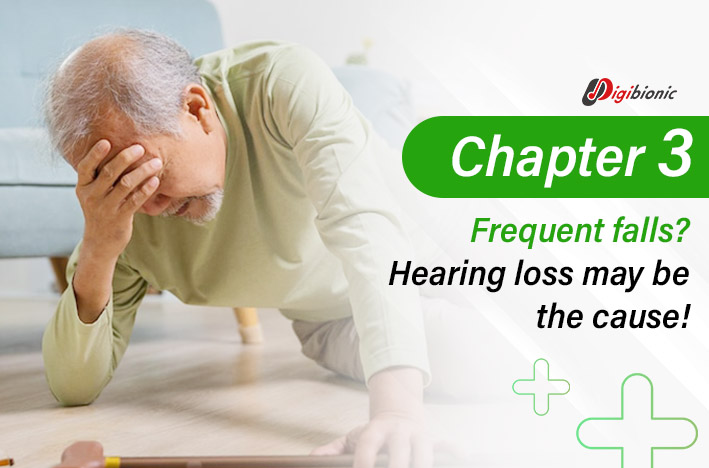
Start paying more attention to your hearing health.
As a physician, you would generally begin by asking patients whether they have ever had their hearing tested. In addition to referring patients for a hearing experience trial and encouraging them to seek treatment for hearing problems, doctors should also inform them about the risks of neglecting hearing loss, including the importance of recognizing potential complications that may be life-threatening.
“Older adults with hearing problems are more likely to develop dementia or Alzheimer’s disease than those with normal hearing… Our research shows that discussions between doctors and patients to urgently address hearing loss are extremely important.”
Neglecting the connection between hearing loss and the development of dementia and Alzheimer’s disease.
Numerous studies indicate that hearing loss may be an early sign of dementia or Alzheimer’s disease. Therefore, ignoring treatment for hearing loss may lead to a decline in cognitive abilities and reduce a patient’s capacity for independence. Providing patients with timely hearing assessments and treatment can help reduce the negative cognitive impacts caused by hearing loss.
Dr. Frank Lin’s research on hearing loss and cognitive function is frequently cited by many medical professionals. This study observed 1,984 older adults with an average age of 77 over a six-year period, tracking their hearing loss and cognitive development to examine the relationship between hearing impairment and cognitive decline.
The research concludes that although further studies are needed to clearly confirm this connection, one thing is certain: hearing loss in older adults tends to lead to cognitive decline and mental health deterioration. The study also shows that the more severe the hearing loss, the higher the risk of cognitive impairment, which may lead to more serious intellectual decline. It also found that the risk of cognitive impairment may begin even in individuals with only mild hearing loss.
【The research also found that hearing loss may accelerate brain shrinkage (atrophy of gray matter) and worsen the brain’s ability to process language. Using hearing aids may help stimulate better hearing and protect the brain from deterioration.】
In January 2014, Dr. Frank Lin and his team conducted research comparing the brains of individuals with normal hearing to those with hearing loss. This new study highlighted significant differences by following 126 participants over a ten-year period and performing annual MRI scans.
Comparing 75 people with normal hearing to 51 with hearing loss revealed that those with hearing impairment began to experience rapid gray matter shrinkage. More than one cubic centimeter of brain tissue was lost in the areas responsible for sound processing and language-related cognitive functions. Additionally, brain shrinkage affected regions involved in memory and essential sensory functions, similar to patterns seen in Alzheimer’s patients.
【The consequences of untreated hearing loss extend beyond reduced income; it also leads to decreased work performance and is linked to anxiety and cognitive problems.】
The importance of early diagnosis and treatment of hearing loss, which helps reduce the risk of dementia and Alzheimer’s disease.
Since hearing loss is one of the causes of dementia and Alzheimer’s disease, the available data shows that leaving hearing loss untreated for a long period can have serious long-term consequences. On average, individuals with hearing problems wait about 7 years after noticing cognitive difficulties before seeking treatment. Therefore, early detection and timely treatment of hearing loss can help preserve hearing. Early diagnosis and treatment can slow the progression of dementia and Alzheimer’s disease. Doctors should encourage patients to seek treatment as soon as hearing loss is detected.
Using hearing aids to treat and prevent hearing loss not only improves hearing performance but may also help prevent brain shrinkage and cognitive impairment.
【The healthcare costs for dementia and Alzheimer’s patients in the United States are approximately 183 billion USD per year and are expected to rise to 1.1 trillion USD annually by 2050.】
Digibionic Hearing Aids Store offers trials of digital hearing aids with high-quality sound adjustment features, allowing you to gradually get accustomed to sounds comfortably and effectively. If you would like information about senior hearing aids or hearing aids at a suitable price, please call 02-115-0568. Listening is a gradual rehabilitation process.
We have 6 branches in Bangkok ready to adjust your hearing aids to your preferences. Because love helps you hear.
Expert guidance from specialized hearing professionals
At Digibionic Hearing Center, we offer comprehensive services.
Whether it’s a hearing assessment, hearing aid trial, or hearing consultation, we offer free services. We also provide home visits in Bangkok for those unable to visit our branches. Currently, we have branches across Bangkok ready to serve you conveniently: Sena Nikhom Branch Sam Yot Branch Saphan Khwai Branch Udomsuk Branch Bang Kapi Branch Bang Khae Branch
All of our branches have professional specialists with the knowledge and experience to provide the best guidance and services. Visiting a Digibionic Hearing Center ensures you receive a thorough hearing assessment and advice tailored to your needs. Don’t hesitate to contact the Digibionic Hearing Center nearest you or call 02-115-0568 to schedule an appointment. We are ready to help you fully enjoy the sounds around you and live a high-quality life.