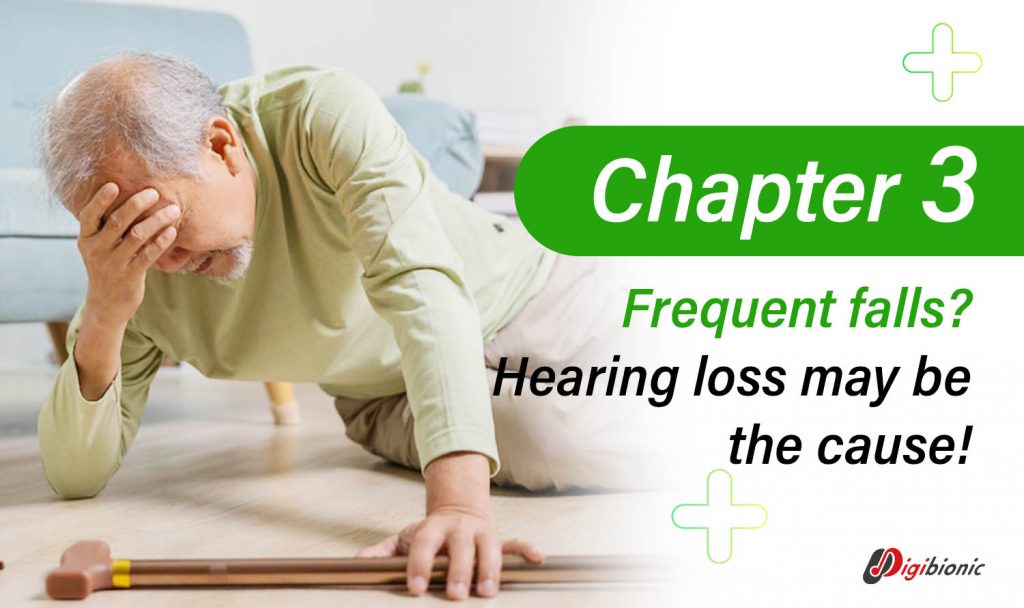
Hearing loss causes patients to fall and suffer injuries requiring hospitalization. Among Americans over the age of 65, falls are a direct or contributing cause of injury and death. Older adults often sustain severe brain injuries, hip fractures, and other bone injuries from falls.
In addition to labor costs, longer hospital stays, surgeries, and related treatments result in billions of dollars in medical expenses in severe cases. As an otolaryngologist and epidemiology scholar, Dr. Frank Lin has conducted extensive research on hearing loss and identified the following reasons linking hearing loss to falls:
• Patients with hearing problems may not be fully aware of their surroundings, increasing the risk of falling.
• When cognitive function declines in patients with hearing loss, the brain’s limited resources must be shared between maintaining balance, movement, walking, and processing sound.
• Inner ear disorders may impair the nervous system, reducing balance control.
“…Because hearing loss is highly prevalent among older adults, and most do not receive treatment, the connection between hearing loss and falls is a very sensitive issue.”
The connection between hearing loss and fall risk is significant. Research continues, but we can conclude that doctors should inform patients about this relationship, recommend annual hearing evaluations, and encourage the use of hearing aids as advised by hearing–health professionals.
Hearing loss reduces environmental awareness and processing efficiency, which may increase the risk of falling.
“Every year, 1 in 3 adults aged 65 and older experiences a fall, and falls are the leading cause of both fatal and nonfatal injuries.”
A major study used data from the National Health and Nutrition Examination Survey (NHANES) from 2001 to 2004 to analyze the relationship between untreated hearing loss and falls. This survey has collected medical data on Americans since 1971.
More than 2,000 participants aged 40 to 69 underwent hearing tests and answered the question, “Have you fallen in the past year?” The research team also tested participants’ vestibular (balance) function to determine whether hearing loss affected balance. According to the study, individuals with mild hearing loss (25 decibels) had nearly three times the risk of falling. For every additional 10 decibels of hearing loss, fall risk increased by 1.4 times. Even after accounting for factors such as age, gender, race, cardiovascular disease, and balance function, the findings remained highly accurate.