
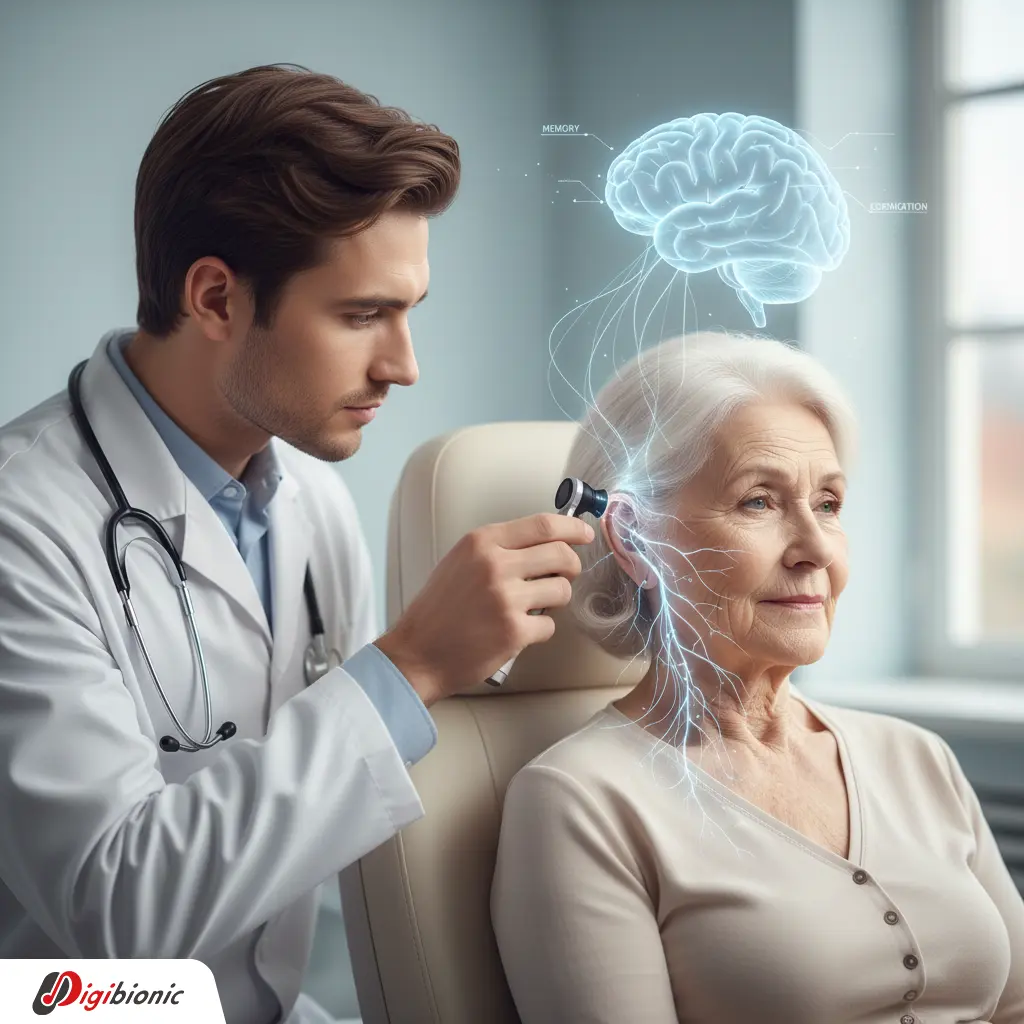
1. From “I Can’t Hear Clearly” to “I Can’t Remember” — When Sound Gradually Fades, Memory May Follow
In everyday life, older adults often say, “People seem to speak unclearly these days. Everything sounds muffled.” Family members may also notice, “His memory doesn’t seem as good as before.”
These observations are not coincidental. Growing research over recent years has shown a close relationship between hearing loss and cognitive decline, including dementia. Hearing difficulties are not merely a sensory issue of the ears; they represent an early warning signal of brain aging and cognitive vulnerability. Many older adults describe that once their hearing declines, even familiar songs no longer feel the same. “Songs I used to recognize instantly now sound different,” some explain. For example, melodies that once required only the first few notes to recall now demand effort to remember the lyrics. What was once automatic becomes mentally exhausting.
From a neurological perspective, sound—especially speech and music—is deeply connected to emotional and memory-related brain networks. When hearing loss reduces auditory input, the brain regions responsible for language processing and emotional memory receive less stimulation. Over time, reduced use of these pathways contributes to functional decline.
The encouraging news is that early detection and appropriate intervention can make a difference. Strategies such as: Properly fitted hearing aids, Auditory rehabilitation and listening training and Music-based auditory stimulation may help slow the progression from “not hearing clearly” to “not remembering”. By maintaining auditory input, we help keep the brain actively engaged—supporting communication, emotional connection, and meaningful memories for longer.
2. Epidemiological Evidence: A “Dose–Response” Relationship Between Hearing Loss and Dementia Risk
A landmark longitudinal study led by Professor Frank Lin at Johns Hopkins University followed 639 dementia-free older adults for 12–18 years. The results showed a clear increase in dementia risk with greater severity of hearing loss. Compared with individuals with normal hearing, the risk of dementia was:
This pattern represents a classic dose–response relationship, meaning that greater hearing impairment is associated with progressively higher dementia risk. These findings have been widely cited by the World Health Organization (WHO, 2019) and the Lancet Commission on Dementia Prevention as key evidence in the field.
Beyond epidemiological risk, hearing loss has measurable effects on brain structure and function. Individuals with hearing impairment show significant reductions in gray matter volume in the temporal lobe and hippocampus, regions essential for language processing and memory. This supports the well-known “use-it-or-lose-it” principle: when auditory input is reduced over time, the corresponding brain networks receive less stimulation and may gradually decline.
Evidence from Asian populations, particularly Taiwan, mirrors these findings.
In 2017, a Mackay Medical College study using the National Health Insurance Database followed more than 8,000 older adults over 10 years and found a higher adjusted dementia risk among those with hearing loss (HR 1.30; 95% CI 1.14–1.49)
In 2021, analysis of 12-year data from the Taiwan Longitudinal Study on Aging (TLSA) showed an increased risk of cognitive decline in individuals with hearing impairment (aHR 1.16). Notably, hearing-aid users demonstrated a trend toward reduced risk (aHR 0.82), although this did not reach statistical significance.
In 2025, a nationwide 15-year cohort study involving over 200,000 individuals reported a significantly higher incidence of dementia in the hearing-loss group (18.67% vs 14.10%) and an earlier age of dementia onset.
Even in cases of sudden sensorineural hearing loss, Lin et al. (2020) found a 1.69-fold increased dementia risk over seven years, with particularly elevated risk among men.
Collectively, these findings establish hearing loss as a cumulative, dose-dependent systemic risk factor that accelerates cognitive decline and dementia trajectories. Early identification and appropriate management of hearing impairment plays a critical role in supporting cognitive longevity.
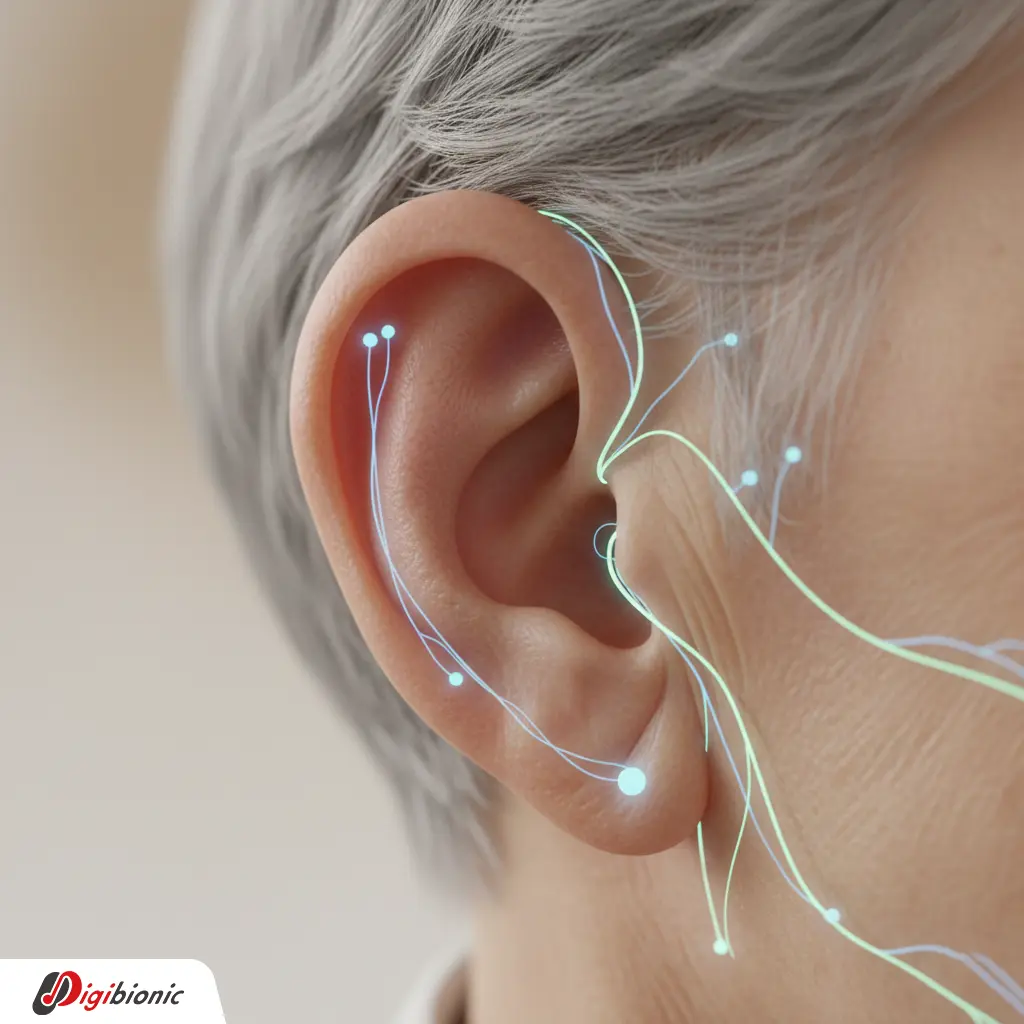
3. Hearing and the Brain: Neurobiological Mechanisms of Cognitive Decline
3.1 Auditory Deprivation and Brain Remodeling, Long-term hearing loss is associated with structural changes in multiple brain regions, particularly the auditory cortex in the temporal lobe and language-processing networks. These changes extend to the medial temporal lobe, including the hippocampus, which plays a central role in memory, as well as the temporo-parietal junction, involved in attention and perception.
Large-scale neuroimaging data from the UK Biobank show that individuals who report hearing difficulties exhibit reduced volumes in cortical and certain subcortical regions. More recent studies further link hearing loss to cortical thinning, reduced brain gyrification, and—in middle-aged and older adults—pathological processes related to tau protein accumulation, a hallmark of neurodegenerative disease.
Importantly, these changes cannot be attributed to aging alone. Prolonged auditory deprivation actively reshapes neural networks, accelerating structural and functional decline in brain systems critical for language and memory.
3.2 Cognitive Resource Reallocation (Listening Effort / Cognitive Load) When speech becomes difficult to understand, the brain compensates by recruiting prefrontal and attentional control networks. As a result, cognitive resources that would normally support memory and higher-level thinking are diverted toward the effort of listening.
Functional neuroimaging studies demonstrate increased prefrontal activation in conditions of moderate speech intelligibility or background noise, accompanied by relative deactivation of posterior brain regions. Clinically, this is often reflected in complaints such as “listening is exhausting” or “I can’t remember what was said after
a conversation,” illustrating the increased cognitive load associated with hearing difficulty.
3.3 Social Withdrawal and Amplified Affective–Cognitive Risk, Hearing loss frequently co-occurs with social withdrawal and depression, as individuals may avoid conversations or group activities due to communication difficulty. Social isolation itself is recognized as an important mediator in the pathway toward dementia.
The Lancet Commission has reported that effective management of 14 modifiable risk factors—including hearing loss and social isolation—could prevent or delay approximately 45% of dementia cases worldwide. Among these, hearing loss and social isolation are considered particularly impactful and actionable in mid-to-late life, underscoring the importance of early detection and intervention.
Clinical Implications: Addressing Hearing Loss May “Slow” Cognitive Decline
Robust randomized controlled trial evidence further supports the role of hearing intervention in slowing cognitive decline. The ACHIEVE Trial (Aging and Cognitive Health Evaluation in Elders), led by Frank Lin’s team at Johns Hopkins University, enrolled nearly 1,000 adults aged 70–84 with mild-to-moderate hearing loss.
Participants were randomized to receive either hearing aids plus auditory rehabilitation or health education alone and followed for three years. Among individuals at higher cardiovascular and cognitive-decline risk, those receiving hearing intervention showed an approximately 48% slower rate of global cognitive decline compared with controls. No significant difference was observed in lower-risk participants.
These findings demonstrate that early hearing intervention can play a decisive role in slowing cognitive decline among high-risk older adults, limit attentional resource diversion, preserve speech comprehension and social engagement, and ultimately slow brain aging and cognitive decline. This evidence has been incorporated into the Lancet Commission’s conclusion that hearing loss is a modifiable risk factor for dementia, with substantial potential impact at the population level.
4. Intervention Strategies: Can Restoring Hearing Delay Dementia?
4.1 Hearing Aids and Cochlear Implants, A growing body of evidence indicates that individuals who use hearing aids appropriately experience a slower decline in speech understanding and memory. For those with more severe hearing loss, cochlear implants can restore auditory input, improving speech recognition and working memory. Within 6–12 months after implantation, improvements in cognitive performance and social functioning are commonly observed.
In everyday practice, many patients report that once hearing is restored, conversations become less tiring and social engagement feels more natural—an experience that aligns well with clinical findings.
4.2 The Importance of Auditory Rehabilitation, While hearing aids compensate for reduced sound input, they cannot fully reverse the brain changes caused by long-term auditory deprivation. The core purpose of auditory rehabilitation is structured training that strengthens connections between the auditory cortex and language networks, allowing the brain to relearn “effective listening.”
Research shows that auditory and speech-understanding training can significantly improve speech recognition, working memory, and attention, while reducing excessive reliance on frontal brain compensation during listening. In practical terms, patients often report that they can listen longer, feel less fatigued, and understand speech more clearly.
Neuroimaging studies further demonstrate increased functional connectivity in the auditory cortex, temporo-parietal junction, and anterior cingulate cortex after weeks to months of training, reflecting restored network plasticity. Importantly, auditory rehabilitation supports not only hearing function, but also cognitive health, emotional regulation, and social confidence, contributing to improved quality of life and potentially slowing cognitive decline.
4.3 Multifactorial Prevention, Both the World Health Organization (WHO) and the Lancet Commission identify hearing loss as a modifiable risk factor for dementia. They recommend regular hearing assessments, timely hearing management, control of metabolic diseases, and maintenance of social engagement as part of comprehensive brain-health care.
Neuroplasticity and Regenerative Potential
The auditory system retains significant neuroplasticity even in adulthood. Although prolonged auditory deprivation can weaken auditory networks or allow other systems to partially replace them, timely auditory stimulation and training may partially reverse these changes. At the cellular level, neurotrophic factors such as NGF, BDNF, and IGF-1 support auditory nerve repair and regeneration, while emerging therapies involving stem cells and exosomes offer future potential to move beyond compensation toward true neural restoration.
Looking Ahead: From Compensation to Restoration
Modern hearing care is evolving from simple sound amplification toward integrated strategies combining devices, rehabilitation, and regenerative medicine. Clinical research increasingly suggests that such approaches may protect not only hearing, but also cognition and overall quality of life. Ultimately, restoring hearing is not just about hearing better—it is about helping the brain age more healthily and remain engaged with life for longer.

5. Policy and Clinical Strategies
From Better Hearing to Long-Term Cognitive Health, Hearing care today is no longer only about the ears—it is an essential part of brain health and healthy aging. As populations age and hearing loss becomes increasingly common, effective solutions require coordinated efforts across public policy, clinical practice, innovation, and community engagement.
A sustainable strategy should address four key domains: early screening, clinical intervention, industrial innovation, and community extension.
5.1 Policy and Health Systems: Prevention First, By integrating national health insurance and long-term care systems, middle-aged and older adults can gain access to regular hearing screening, hearing-aid support, and auditory rehabilitation services.
Experience from the UK and the US shows that follow-up after hearing-aid fitting is critical. Hearing aids are effective only when they are worn consistently and paired with proper listening training. Community-based hearing-care stations can further improve access by offering hearing tests, device adjustments, rehabilitation, and dementia screening in one place.
5.2 Clinical Implementation: Interdisciplinary and Personalized Care, Modern hearing care should involve collaboration among ENT specialists, audiologists, speech-language therapists, neurologists, and psychologists through integrated “hearing–cognition clinics.”
For example, an older adult who wears hearing aids but still struggles in noisy environments may need not only device adjustment, but also structured auditory training to help the brain process sound more efficiently.
Digital audiology data, neuroimaging, and AI-assisted tools allow clinicians to design individualized rehabilitation plans and provide remote services, improving access for rural areas and long-term care facilities.
5.3 Innovation and Industry Collaboration: Building an Ecosystem, With strengths in hearing-aid manufacturing, smart acoustics, clinical research, and regenerative medicine, With its integrated health-insurance system, strong clinical research capacity, and advanced hearing-technology industry, Thalandi is uniquely positioned to lead the Asia-Pacific region in auditory–cognitive longevity care.
In the near future, hearing aids may evolve beyond sound amplification to become part of a broader brain-health platform—combining rehabilitation, nutrition, and digital health technologies.
5.4 Community and Education: Empowering Individuals, Public education is fundamental. Increasing awareness that hearing loss is treatable and manageable, promoting correct hearing-aid use, and encouraging post-fitting auditory training all make a meaningful difference.
Hearing-friendly environments in schools and workplaces, along with regular hearing checks, can help prevent long-term damage. For older adults, community activities and social engagement reduce isolation and depression—key factors linked to cognitive decline.
Conclusion: When policy, clinical care, and innovation move forward together, we can create a new model of hearing health—one that supports not only better hearing, but also better understanding, longer independence, and preserved memory. From hearing better and understanding better, to living longer and remembering longer.
6. Thailand’s Challenges and Opportunities
Community screening data indicate that approximately 40% of Thailand adults aged 65 and older experience hearing loss severe enough to affect daily functioning. This highlights hearing loss as a common aging-related health issue. Although nationwide data on hearing-aid adoption remain limited, gaps persist in device access, medical integration, and long-term rehabilitation follow-up.
Recent studies also show positive associations between air pollution, sensorineural hearing loss, and increased dementia risk. These findings suggest that hearing care should move beyond clinical intervention alone toward a combined strategy of prevention and health promotion.
From Devices to Integrated Hearing Care
In recent years, Thailand’s hearing-aid industry has transitioned from traditional retail toward smart, cloud-connected, and clinically integrated models. Several domestic brands now offer end-to-end systems—from product design and acoustic testing to remote fitting and follow-up—while extending hearing screening and counseling into community settings.
For example, an older adult may first receive a hearing check in the community, be fitted with hearing aids, and continue follow-up remotely— reducing barriers to ongoing care and improving real-world outcomes. This approach lays the foundation for accessible, continuous hearing care close to home.
An Integrated Model: Prevent, Compensate, Repair
By combining smart hearing-aid technologies with advances in regenerative inner-ear research and nutrition-based neuroprotection, Thailand has the potential to establish a comprehensive care pathway that integrates
Such integration shifts the focus from merely amplifying sound to preserving long-term brain health and quality of life.
Hearing Health as the Basis of Brain and Social Well-being
Hearing health supports not only sound perception, but also cognition, emotional balance, and social connection. A growing body of evidence confirms hearing loss as a key modifiable risk factor for dementia, and that early intervention with hearing aids and auditory training can meaningfully slow cognitive decline.
Future auditory medicine will likely follow an integrated pathway of protection, repair, regeneration, and functional rebuilding, combining medical devices, neural training, and holistic health management.
Looking Ahead
With strong clinical research capacity and a solid industrial base, Thailand is well positioned to become a regional hub for Auditory–Cognitive Longevity. This vision goes beyond better hearing—aiming to support longer independence, preserved memory, and sustained engagement with life as populations age.


The latest model Hearing Aid Service Center of 2025. The newest hearing aids with excellent quality and service.

Expensive hearing aids come with many features, but they may not be the right choice for you!

Hearing aids price in Thailand often leads to hesitation in seeking the help they need. However, it’s important to view…
เราใช้คุกกี้เพื่อพัฒนาประสิทธิภาพ และประสบการณ์ที่ดีในการใช้เว็บไซต์ของคุณ คุณสามารถศึกษารายละเอียดได้ที่ นโยบายความเป็นส่วนตัว และสามารถจัดการความเป็นส่วนตัวเองได้ของคุณได้เองโดยคลิกที่ ตั้งค่า