
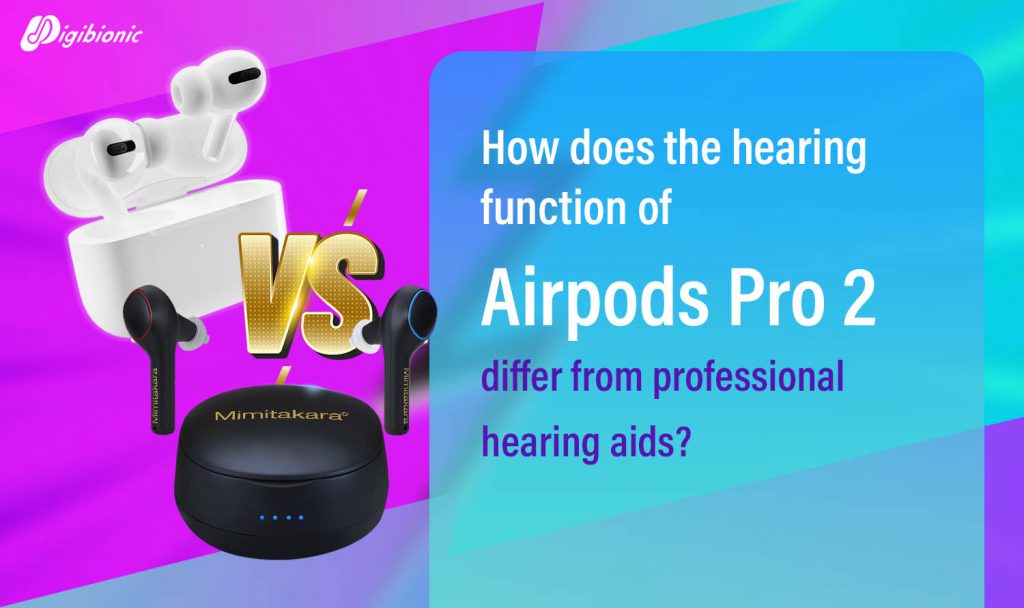
We are pleased that Apple has announced an update to the AirPods Pro 2, introducing new hearing assistance features that provide hearing aid–like functions for users with mild to moderate hearing loss. This update reflects the growing recognition that hearing loss is a significant issue that should not be overlooked in today’s world.
Today, Digibionic Hearing Aid Store would like to introduce you to the key differences between the hearing assistance features of the AirPods Pro 2 and those of traditional professional hearing aids.
Before we begin, let’s take a look at a basic comparison table between the two.
Comparison
| Category | AirPods Hearing Assistance | Professional Hearing Aids |
|---|---|---|
| Purpose | Designed primarily as wireless earphones with added hearing assistance features | Designed specifically for individuals with hearing loss for long-term use |
| Sound Quality & Processing | Conversation enhancement with basic sound processing | Advanced digital signal processing that reduces noise and enhances speech clarity |
| Personalization & Responsiveness | Cannot be customized to an individual’s specific hearing profile | Precisely customized based on each user’s hearing test results |
| Long-Term Comfort | Intended for short-term use; may not be suitable for extended wear | Designed for long-term daily use with comfort in mind |
| Price | Lower cost; categorized as general consumer electronics | Higher cost; some models can be covered by social security benefits |
| Legal Regulations | Not regulated as medical devices | Classified as medical devices and must meet professional standards and regulations |
After learning about the basic advantages of digital hearing aids, we can summarize the key points as follows:
The strength of digital hearing aids lies in their ability to enhance speech clarity, using extensive hearing data to tailor sound precisely to the user’s needs. AirPods Pro, on the other hand, feature spatial audio designed primarily for entertainment and convenience, suitable for individuals with mild hearing loss. Meanwhile, professional digital hearing aids incorporate multi-directional microphone systems to improve speech clarity in various environments—one of the major reasons why medical-grade hearing aids are more expensive than general consumer earphones.

However, hearing rehabilitation is a process that requires careful attention. Hearing aids are important medical devices regulated by the FDA, and they require continuous adjustments by your hearing specialist. Therefore, we recommend that you consult with the experts at Digibionic Hearing Aid Store. Call 02-1150568 — we are always ready to provide you with consultation, knowledge, and guidance regarding hearing aids.
We will use the Mimitakara Goodhearing T1 from Digibionic as an example to compare with the AirPods Pro 2. Let’s take a look at the differences to help you understand them more easily.
Comparison Table
| AirPods Pro 2 | Mimitakara Goodhearing T1 | |
|---|---|---|
| Price | 8,990 THB | Promotional price now 7,990 THB |
| Accessories | Charging set | Charging set |
| Functions | – Noise cancellation – Transparency mode – Surround sound listening – Enhanced call quality | – Ambient sound amplification – Noise management – Personalized hearing adjustment |
| Bluetooth Connectivity | Yes | Yes |
| Battery Life | Earbuds last about 5 hours per use, and up to 3 hours of talk time | Hearing aid mode + Bluetooth streaming lasts about 7–8 hours, with up to 3 hours of talk time |
Therefore, if you enjoy using AirPods along with Bluetooth streaming, we recommend trying our Goodhearing T1 digital hearing aids for free at any Digibionic service center. Simply call 02-1150568 to book an appointment.
After comparing the price and differences between hearing aids and AirPods Pro, we would like to conclude by explaining why high-quality hearing aids, or hearing aids for seniors, are more expensive than regular devices.
AirPods or general Bluetooth earphones are primarily designed for entertainment. Apple added a hearing-aid-like function to this model with the intention of helping users with mild to moderate hearing loss address part of their hearing difficulties, while also reducing safety risks and the likelihood of dementia associated with hearing loss. Meanwhile, high-quality hearing aids from professional hearing aid stores come with different numbers of sound channels, levels, functions, and compensation modes for various listening environments.
If your average hearing loss is 60 dB or more, we recommend choosing a high-quality hearing aid from a hearing aid store. These devices offer a variety of ear-tip options, feedback management, enhanced speaker performance, continuous sound adjustment based on your audiogram, and sound testing across different environments. This is the best option for people with significant hearing loss. (You can call 02-1150568 to schedule a free consultation about your audiogram and hearing condition.)
Although the AirPods Pro 2 allows you to use a feature similar to Mimitakara’s Goodhearing, including a basic hearing check through your mobile phone, the accuracy of frequency testing, speech recognition, and the process of improving face-to-face communication are also crucial. This is why we recommend visiting a hearing aid store to compare your options with high-quality hearing aids available in-store.
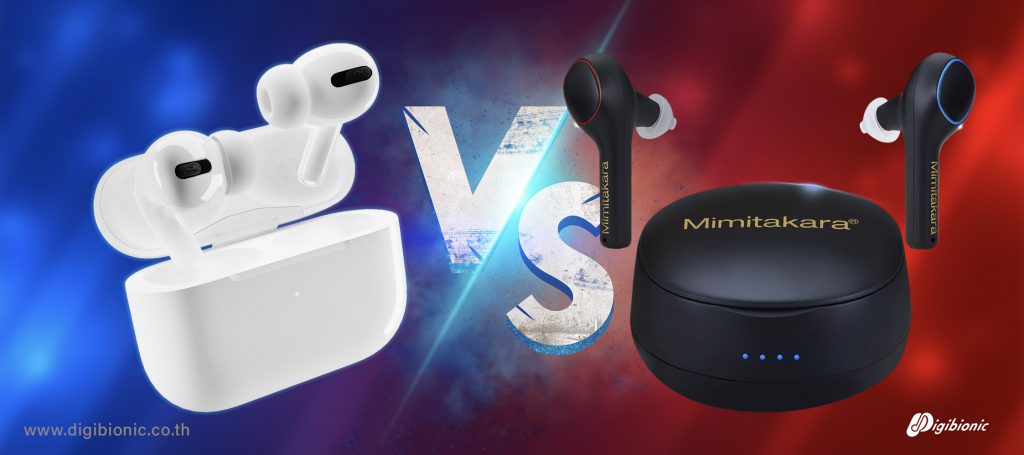
If you have mild hearing loss and do not need to wear a device for long periods due to work or going out, we believe that using the latest AirPods Pro from Apple can temporarily meet your hearing support needs. However, if your hearing loss begins to affect your daily life and you have already received medical advice, choosing a hearing aid that is professionally customized is the most important decision. (Each hearing aid model, price level, directional microphone system, and sound adjustment capability will differ.)
Let people experience the beauty of hearing aids and hear the sounds of their family’s love once again.
If you wish to share that love with Digibionic, please contact us…


3 Ways to Choose a Hearing Aid: Expensive hearing aids may have many features, but a high-priced hearing aid might not be suitable for you!
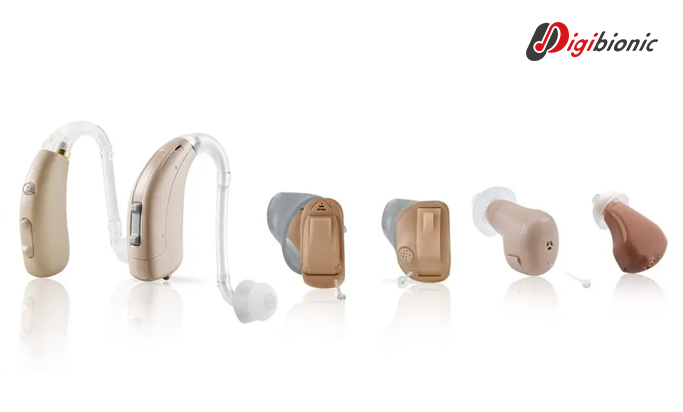
Why do hearing aid prices vary by model? One factor that increases the price is the technology, research and development, as well as the capabilities of the hearing aid.

Currently, it is found that up to 80% of seniors experience hearing loss due to age-related auditory nerve degeneration, typically starting between the ages of 60 and 80.
เราใช้คุกกี้เพื่อพัฒนาประสิทธิภาพ และประสบการณ์ที่ดีในการใช้เว็บไซต์ของคุณ คุณสามารถศึกษารายละเอียดได้ที่ นโยบายความเป็นส่วนตัว และสามารถจัดการความเป็นส่วนตัวเองได้ของคุณได้เองโดยคลิกที่ ตั้งค่า