
Today, a wide range of hearing devices is available, from everyday listening accessories to medical-grade hearing aids designed to address individual hearing needs. While these devices may appear similar in some ways, they serve different purposes and offer distinct benefits and limitations.
Choosing the right device depends on several factors, including the intended use, individual hearing needs, and hearing test results.
Clip-on earphones are designed for comfort and convenience. Depending on the design, they attach to the outer ear or rest near the ear canal without necessarily being inserted into it. They are commonly used for listening to audio from electronic devices in everyday situations.
Advantages
Limitations
Who Are They Suitable For?
Clip-on earphones are suitable for individuals who need a convenient device for everyday audio listening. However, they should not be considered a substitute for hearing aids for individuals diagnosed with hearing loss.
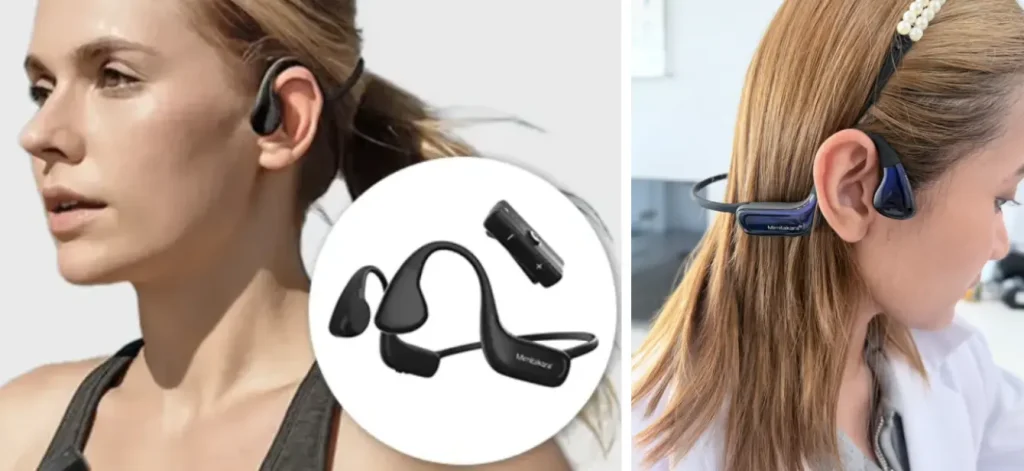
Bone conduction headphones with a remote microphone are designed to capture sound through a separate Bluetooth microphone and transmit it to a bone conduction listening device.
Unlike conventional headphones, which deliver sound through the ear canal and eardrum, bone conduction technology works by transmitting sound vibrations through the bones of the skull to the inner ear. This allows users to listen without blocking the ear canal.
Key Features of Bone Conduction Headphones
Advantages
Limitations
Who Are They Suitable For?
People who prefer bone conduction technology, do not want to block their ear canals, or are interested in using a remote microphone to hear sounds in specific situations. Anyone experiencing hearing difficulties should consult a hearing care professional to determine whether this type of device is appropriate.
For more product information, visit:
Medical-grade hearing aids are designed to compensate for hearing loss by processing and adjusting sound according to an individual’s hearing test results and listening needs.
Signia offers several hearing aid styles, including Pure, Silk, and Motion. Each series features different designs and capabilities, depending on the specific model and technology level.
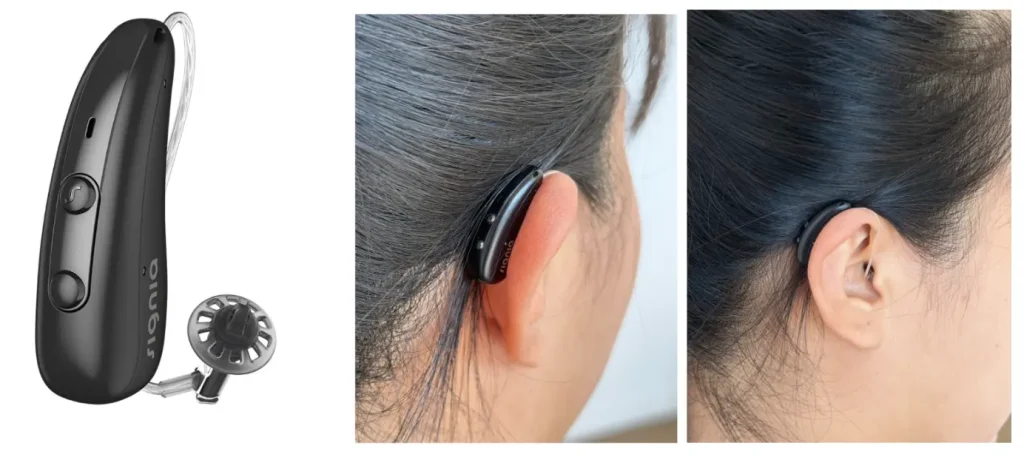
RIC hearing aids feature a main body worn behind the ear, with a small receiver (speaker) positioned inside the ear canal.
Advantages
Limitations
Signia Silk is a small hearing aid designed to fit inside the ear canal. Its discreet design makes it less noticeable when worn. Available features and compatible accessories may vary depending on the product version and market.
Advantages
Limitations
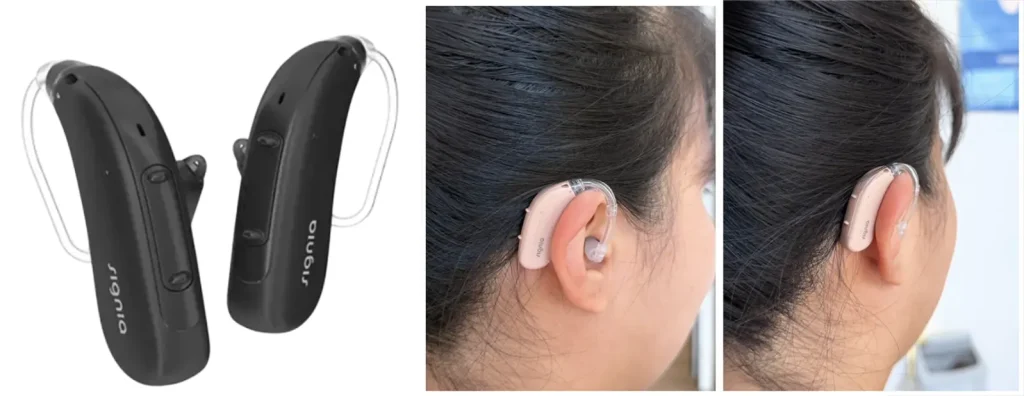
Signia Motion is a Behind-the-Ear (BTE) hearing aid. The main unit sits behind the ear and delivers sound into the ear canal through a tube or other sound-delivery component. Different models and amplification levels are available to suit individual hearing needs.
Advantages
Limitations
Comparison Criteria | Clip-On Earphones | Bone Conduction 6K11 | Signia Hearing Aids |
Primary Purpose | General audio listening | Delivers sound through bone vibrations | Designed to compensate for hearing loss |
Personalization Based on Hearing Test Results | Generally limited | Depends on the type of device | Supported through model-specific fitting and adjustments |
Wearing Comfort | Depends on the design | Open-ear design that does not block the ear canal | Varies by style: Pure, Silk, and Motion |
Suitability for People with Hearing Loss | Should not be used as a substitute for hearing aids | Requires an assessment to determine suitability | Suitable when appropriately selected and professionally fitted |
Key Considerations | Sound quality and wearing comfort | Sound transmission technology and actual performance | Hearing test results, professional fitting, and follow-up care |
Conventional hearing aids can be adjusted to match an individual’s hearing test results and listening needs. The available features and adjustment options vary depending on the model and technology level.
These adjustments may include amplification across different frequency ranges, settings designed to improve speech understanding in various listening environments, and volume adjustments to ensure a comfortable listening experience. All adjustments should be based on hearing test results and real-world listening assessments. Increasing amplification across all frequencies is not always necessary or appropriate.
After beginning to use a hearing aid, users should pay attention to any signs of discomfort or difficulty, such as excessively loud sounds, unclear speech, whistling noises (feedback), or discomfort while wearing the device. If any of these issues occur, users should return to a hearing care professional for further assessment and adjustments as needed.
Proper maintenance is equally important. Users should follow the manufacturer’s cleaning instructions, protect the device from moisture, check ear tips and sound-delivery components regularly, and replace parts when necessary. These practices help maintain the device’s performance and reliability over time.
If you are looking for a device for general audio listening, clip-on earphones may be a convenient option. Bone conduction headphones offer an alternative for those who prefer listening without blocking the ear canal. However, neither type is necessarily designed to serve the same purpose or provide the same level of hearing support as medical-grade hearing aids.
For individuals experiencing hearing difficulties, hearing aids such as the Signia Pure, Silk, and Motion are specifically designed to help compensate for hearing loss. Choosing the right model should take into account hearing test results, the degree of hearing loss, ease of use, and recommendations from a hearing care professional.
Our Recommendation
If you find yourself frequently asking others to repeat themselves, regularly increasing the volume of your television or other devices, or having difficulty following conversations, it is advisable to have your hearing assessed before purchasing any hearing device.
A professional hearing assessment can help determine the most appropriate solution for your individual needs and support better hearing and long-term listening comfort.

เราใช้คุกกี้เพื่อพัฒนาประสิทธิภาพ และประสบการณ์ที่ดีในการใช้เว็บไซต์ของคุณ คุณสามารถศึกษารายละเอียดได้ที่ นโยบายความเป็นส่วนตัว และสามารถจัดการความเป็นส่วนตัวเองได้ของคุณได้เองโดยคลิกที่ ตั้งค่า